


Project overview
Hydrogenera has been selected for funding as part of the ENSA project, under the Interregional Innovation Investments (I3) Instrument. The project has reached the stage of preparing the grant agreement and focuses on demonstrating an integrated green hydrogen system in Bulgaria.
The ENSA project is part of the Interregional Innovation Investments Instrument. It brings together 27 partners from 11 EU countries, with a total budget of over €10 million, and focuses on advancing energy storage solutions across Europe.
Why energy storage matters
As renewable energy capacity continues to grow, energy systems increasingly face timing-related challenges. Energy is often produced when it is not immediately needed. Without effective storage, part of this energy cannot be used efficiently.
This creates a clear need for solutions that can store energy and make it available when demand increases.
Hydrogen plays an important role in this context, especially for long-term energy storage. It enables energy to be stored over longer periods and used when required, supporting more stable and flexible energy systems.
Integrated hydrogen system demonstration
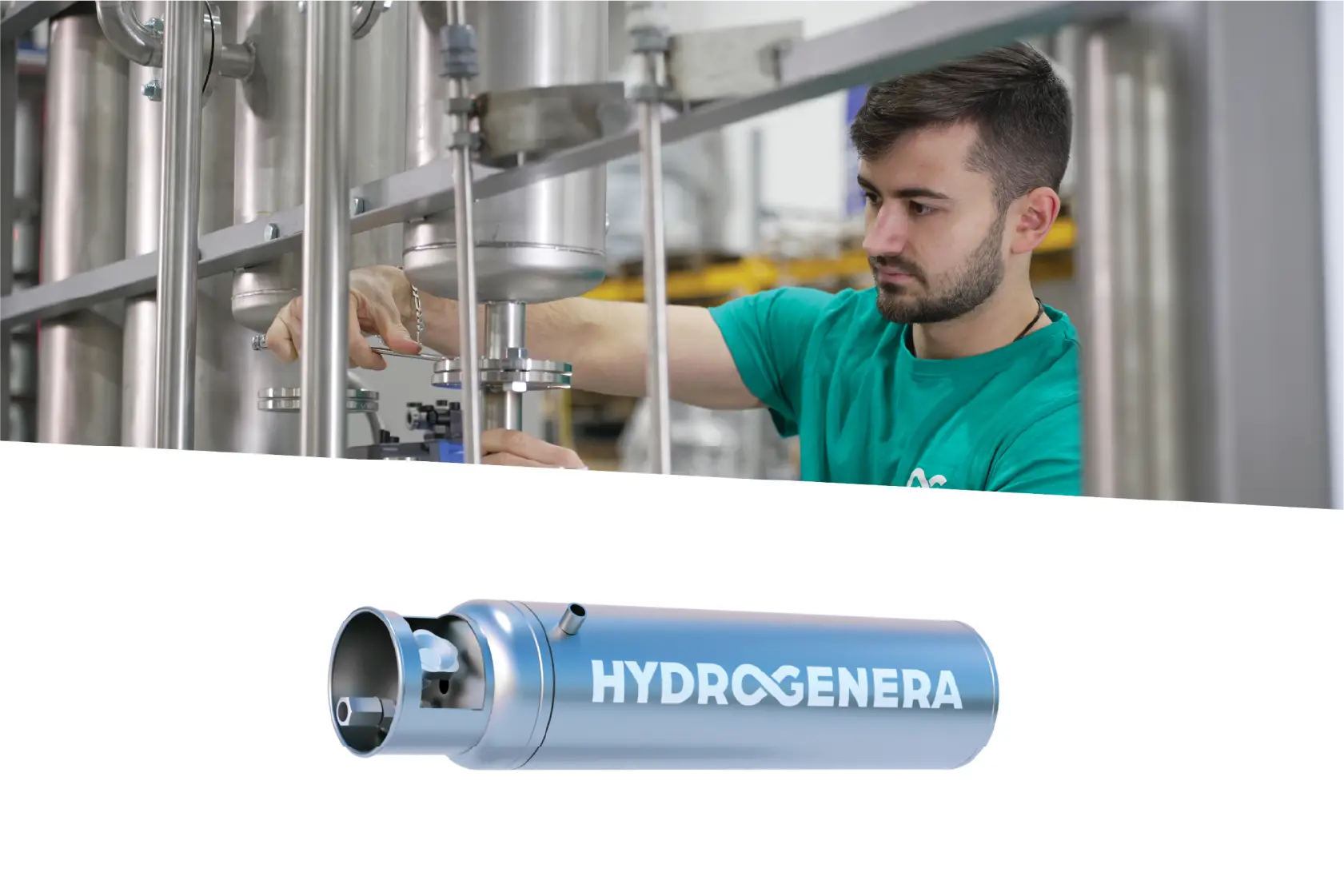
Within this project, Hydrogenera will demonstrate an integrated system that combines hydrogen production and storage in a single installation.
The system includes an electrolyser and a solid-state metal hydride storage unit, coupled with an on-site solar installation. The pilot will be hosted at the premises of project partner Regioplan EOOD in Bulgaria.
The goal is to validate the full hydrogen cycle under real operating conditions, from production to storage and delivery.
Performance validation
A key focus of the project is performance validation.
The system will be assessed for efficiency, hydrogen purity, durability, and operational safety. This will be carried out through extended cycling, leak-detection procedures, and thermal-behaviour mapping.
These tests are designed to evaluate system performance over time and under varying conditions.
Role of metal hydride storage
The use of solid-state metal hydride storage is particularly relevant in this project.
It enables hydrogen to be stored at relatively low pressure with stable, controlled absorption and release. This makes it suitable for applications where safety, reliability, and repeatable performance are important.
Project impact
The project contributes to the development of practical hydrogen storage solutions in Europe.
By demonstrating a complete, integrated system, it supports the transition from individual technologies to real-world applications deployable at scale.
Next steps
The project is currently in the grant agreement preparation phase. Further updates will follow as the process is completed and the pilot progresses.
