


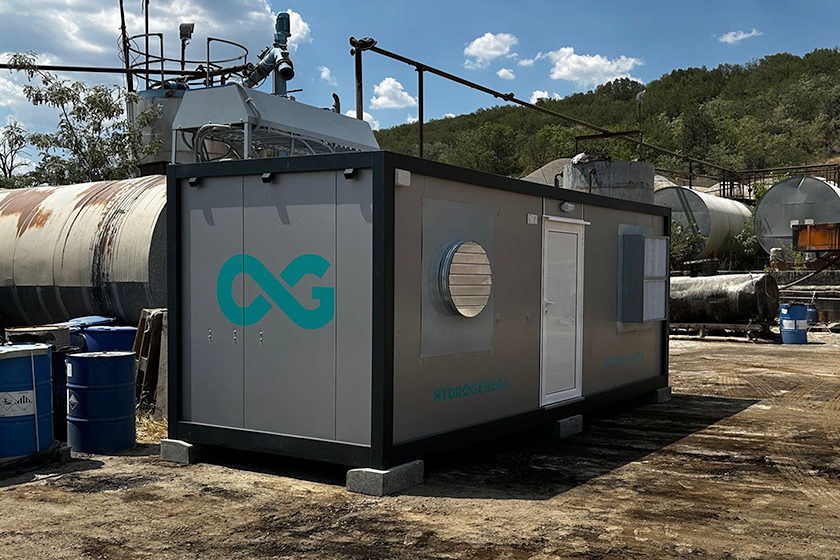
Green hydrogen is emerging as an essential component in industrial decarbonisation strategies. Many organisations aim to integrate hydrogen directly within their operations to reduce emissions, improve efficiency, and support long-term sustainability.
A significant challenge is the limited space available in most industrial environments. Compact electrolyser solutions have therefore become a critical enabler for hydrogen adoption across several sectors.
Hydrogenera’s compact alkaline systems serve as one example among many providers currently innovating in this field.
1. Why are compact electrolysers necessary
Industrial sites usually face strict spatial limitations. New installations must fit within predefined technical rooms, outdoor utility areas, or existing process blocks. Many facilities were not designed with hydrogen in mind, which means equipment must be modular, space-efficient, and able to operate with minimal structural modifications.
Compact electrolysers address these constraints by reducing the physical footprint required for hydrogen production. They allow organisations to begin producing hydrogen on site without the need for large-scale civil works. The growth of modular systems has also made hydrogen more accessible for decentralised and small-scale users, including research facilities, logistics hubs, and small manufacturing lines.
These systems reduce installation time, simplify permitting, and lower overall project complexity. As a result, compact electrolysers are increasingly seen as a bridge between early pilot-scale adoption and larger future deployments.
2. Technology foundations. How compact systems are engineered
Compact electrolysers are designed to maximise hydrogen production while minimising physical footprint. This requires careful optimisation of stack design, auxiliary systems, and thermal management. Three dominant electrolysis technologies are commonly used.
2.1 Alkaline electrolysis
Alkaline electrolysers use a 30 per cent potassium hydroxide electrolyte and typically operate at lower current densities than PEM units. Historically, alkaline systems were larger, but modern engineering has enabled more compact configurations through improved stack geometry and balance-of-plant integration.
Many compact alkaline systems operate with energy consumption near 55 kWh per kilogram of hydrogen, placing them within the performance range of other technologies. Hydrogenera’s E Series and Z Series units maintain this level of efficiency consistently across all system sizes.
Alkaline systems are valued for durability, predictable operation, and low catalyst costs. They remain a preferred choice in industrial environments that favour long service life and stable output.
2.2 PEM electrolysis
PEM (Proton Exchange Membrane) electrolysers use a solid polymer membrane and can operate at higher current densities, reducing stack size relative to output. This makes PEM a strong candidate for compact installations.
PEM systems can respond quickly to fluctuating electrical input, making them well-suited to renewable-powered applications. They typically achieve hydrogen purities of 99.999 per cent and can produce hydrogen at elevated output pressures.
2.3 AEM electrolysis
AEM (Anion Exchange Membrane) technology aims to merge characteristics of both alkaline and PEM systems. These electrolysers often use non-precious catalysts and can be highly modular. Many AEM systems are built from dozens or hundreds of small stack modules, allowing for fine-grained scalability.
AEM is an emerging category that is gaining interest for compact or decentralised hydrogen production, where simplicity and modularity are key priorities.
3. Compact alkaline systems. Hydrogenera as a case example
Compact alkaline electrolysers illustrate how traditional technology can be adapted for limited-space environments. Hydrogenera’s systems are one example of this trend, offering small to medium-scale configurations for indoor and outdoor deployment.
3.1 E Series. Indoor hydrogen generation
The E Series is designed for indoor industrial environments where hydrogen is used directly to improve combustion processes. Rather than positioning hydrogen as a standalone energy carrier, the system enables blending hydrogen into existing burners, kilns, and thermal applications to enhance flame stability, increase process efficiency, and reduce fossil fuel consumption.
Its compact indoor configuration enables installation close to the point of use, minimising hydrogen handling and storage requirements. This makes the E Series particularly suitable for facilities seeking incremental decarbonisation through combustion optimisation, without requiring significant changes to existing infrastructure.
By focusing on combustion enhancement as the primary application, the E Series delivers measurable operational benefits while supporting a gradual transition away from conventional fuels.
The E Series includes 30 kW, 60 kW, 90 kW, 250 kW, and 500 kW configurations. Hydrogen production ranges from 6 to 100 Nm³/hour. Output pressure is 0.5 bar across all units. Dynamic range is 10 to 100 per cent, and energy consumption is approximately 55.5 kWh per kilogram of hydrogen.
E Series-Specification
Key features:
- Indoor installation available for selected system sizes
- 15-year system lifetime
- Water consumption of around 1 litre per Nm³ of hydrogen
- Integrated water purification, cooling, and control systems
These systems demonstrate how alkaline technology can be delivered in compact indoor units suitable for laboratories, pilot production lines, and controlled-environment facilities.
3.2 Z Series. Outdoor modular configurations
The Z Series includes 30 kW and 60 kW units, as well as larger configurations of 0.5 MW, 1 MW, and 2.5 MW. Hydrogen output ranges from 6 to 500 Nm³ per hour. Larger units can achieve up to 12 barg output pressure, which supports integration with industrial compression and storage systems.
Z Series-Specification
Common features include:
- Energy consumption of approximately 55.5 kWh per kilogram
- Hydrogen purity of 99.9 per cent with optional purification to 99.999 per cent
- Outdoor installation from –10°C to +40°C
- 15-year system lifetime
The modularity of the Z Series enables phased installation where operators start with one module and add more capacity over time. Optional components for compression, storage, and additional gas purification support the creation of complete hydrogen production systems.
4. Hydrogenera’s compact electrolyser success projects
The practical value of compact electrolysers is best understood through actual projects. Hydrogenera’s recent deployments illustrate how compact alkaline systems can be integrated in different environments and sectors.
Elena Dairy. 40 kW hydrogen system for fuel oil boiler optimisation
The Elena Dairy project in Bulgaria installed a 40 kW E Series hydrogen system to improve the performance of a fuel oil boiler at a dairy plant in the Stara Planina mountain region. Hydrogen and oxygen produced by the electrolyser are blended with the fuel and air mixture and supplied to the existing boiler.
Independent measurements from the project reported:
- Around a 32 per cent reduction in fuel oil consumption
- Reductions of up to 30 per cent in sulphur dioxide and carbon dioxide emissions
- Approximately a 25 per cent reduction in nitrogen oxides
- Particulate matter emissions reduced by a factor of six to eight
The system is compact and integrated into the existing boiler room. The project shows that even at a modest scale, a 40 kW hydrogen system can significantly reduce fuel use and emissions in a conventional industrial boiler. It also demonstrates that compact electrolysers can be used to decarbonise sectors such as dairy processing, which often rely on heavy fuel oil and have limited available space.
Weber Saint-Gobain, Kostinbrod, Bulgaria. 60 kW system for a 2.4 MW spray dryer
At Saint Gobain Weber’s plant in Kostinbrod, Bulgaria, the existing equipment consists of a spray dryer with a 2.4 MW natural-gas burner. A 60 kW hydrogen system from Hydrogenera was integrated into this burner line.
Hydrogen is produced on site and blended into the combustion system. The installation is compact, designed to fit within the constraints of an operational industrial plant without significant redesign of the production line. Reported outcomes include a substantial reduction in natural gas consumption and improved overall energy efficiency of the dryer.
The Weber project shows how a relatively small electrolyser capacity, when applied intelligently to an extensive thermal process, can deliver meaningful fuel savings. It is also a clear example of a compact electrolyser being used in a high-temperature, high-throughput industrial environment where production continuity is critical and space for new equipment is limited.
Botanical Garden of the Polish Academy of Sciences, Warsaw. Boiler efficiency boosted by 29.2 per cent.
A third project focuses on a public research and horticultural site rather than a heavy industrial plant. At the Botanical Garden of the Polish Academy of Sciences in Warsaw, Hydrogenera worked with the Stanisław Staszic Academy of Mining and Metallurgy in Kraków to integrate hydrogen into a 1 MW Viessmann low-temperature boiler, model Vitoplex 300 TX3A.
The project was structured as a detailed study with two stages. In the first stage, the boiler operated solely on natural gas and baseline efficiency was measured. In the second stage, hydrogen and oxygen from an electrolyser were introduced alongside natural gas. The evaluation included both the extra energy contributed by the hydrogen and the electricity used by the electrolyser.
The measured result was a 29.2 per cent increase in overall system efficiency compared with the baseline. This increase was achieved without replacing the boiler or enlarging the boiler room footprint. The electrolyser and associated equipment were installed within the existing technical space of the botanical garden’s boiler house.
This project highlights two crucial aspects of compact electrolysers. First, they can be used not only in heavy industry but also in public and research facilities. Second, they can be installed in legacy boiler rooms with constrained access and footprint, while still delivering measurable efficiency improvements.
5. How compact systems compare across the industry
Compact electrolysers share several operational principles, regardless of the technology used. Their differences are usually related to stack design, footprint, auxiliary systems, and dynamic response.
5.1 Footprint and installation approach
Providers across the industry emphasise modularity and pre-assembled delivery. Many units arrive in containerised or skid-mounted forms. This reduces the need for on-site construction and shortens installation windows.
Compact alkaline systems, including Hydrogenera’s, are typically designed for simple installation within existing industrial utility areas. Compact PEM systems from other providers often come in 20-foot or 40-foot containers designed to minimise space and accelerate commissioning.
5.2 Efficiency and energy performance
Most compact electrolysers, regardless of technology, operate within a similar efficiency band of 50-60 kWh per kilogram of hydrogen. The consistency of this range is an essential factor for energy planning. Hydrogenera’s E Series and Z Series systems maintain approximately 55.5 kWh per kilogram across all configurations.
PEM systems typically operate at comparable levels, sometimes with slightly higher energy consumption due to pressurised output. AEM performance varies by manufacturer but is generally within the same order of magnitude.
5.3 Dynamic operation
Dynamic range influences the ability to follow variable loads or integrate with renewable power sources. Most compact systems offer turndown to 10 per cent of rated capacity. This allows operators to align hydrogen production with electricity availability and process demand.
PEM systems usually ramp fastest, which is beneficial for highly intermittent power input. Modern alkaline systems have narrowed the gap through improved control systems and stack designs.
5.4 Purity and downstream integration
Purity requirements differ by application. Many processes accept 99.9 per cent hydrogen, while others require up to 99.999 per cent. Hydrogenera’s systems offer optional purification to meet the higher threshold.
PEM systems often deliver high purity by default. AEM systems can vary, depending on membrane configuration and internal gas handling.
6. Industrial use cases for compact electrolyser deployment
Compact electrolysers enable the adoption of hydrogen across a diverse range of industries. Their reduced footprint allows them to fit within operationally sensitive or spatially limited environments.
6.1 Manufacturing processes
Hydrogen is used in heat treatment, glass production, metal processing, and semiconductor manufacturing. Compact electrolysers enable on-site hydrogen generation for these processes without extensive plant redesign.
6.2 Mobility and logistics infrastructure
On-site hydrogen production can support small-scale refuelling operations. Compact systems are well-suited to depots, ports, and fleet facilities that lack space for large hydrogen plants.
6.3 Research and development facilities
Laboratories and pilot plants often require precise, controllable hydrogen supplies. Indoor-rated compact systems, such as the E Series, allow safe generation with controlled purity and flow.
6.4 Distributed industrial sites
Smaller factories, remote facilities, and energy hubs benefit from decentralised hydrogen production. Compact electrolysers reduce reliance on delivered hydrogen and increase resilience.
7. Outlook for compact hydrogen production technologies
Future developments are likely to focus on several areas. Increased stack efficiency is expected across all technologies. Improvements in balance-of-plant integration may further reduce the footprint. Digital monitoring and predictive maintenance will enhance reliability. New materials in AEM and alkaline stacks may reduce costs and increase lifetime.
Organisations exploring compact hydrogen production solutions can benefit from understanding how different technologies perform in real industrial environments. Hydrogenera provides detailed technical specifications, engineering guidance, and project support for facilities assessing on-site hydrogen generation.
If you want to review system configurations or discuss integration requirements, you can learn more and contact the team directly at hydrogenera.eu.
