


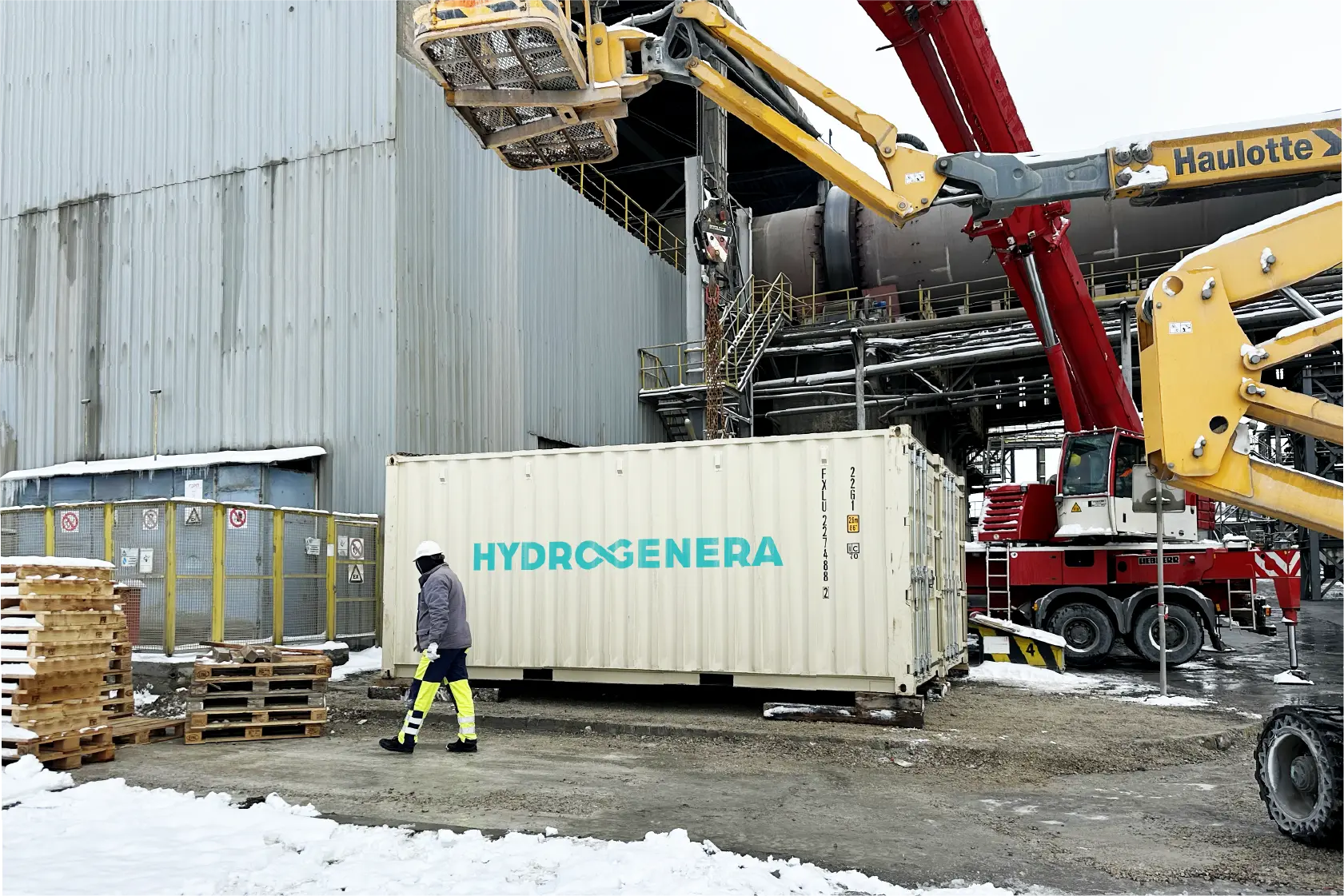
Hydrogenera’s E-Series has been tested in industrial cement production to explore how hydrogen and oxygen can reduce coal use and increase alternative-fuel use. Two trial comparisons recorded different benefits: lower fuel heat consumption in one and a larger shift away from coal in the other.
The findings provide a practical basis for further development, while showing why production output, electricity demand and kiln conditions must be assessed alongside fuel savings.
The challenge
For cement producers, changing the fuel mix involves more than replacing one fuel with another. Combustion performance, clinker quality and production output all matter.
Increasing alternative-fuel use must therefore work within the plant’s operating requirements. Reducing coal consumption is valuable, but its significance depends on how much clinker the kiln produces, the energy it consumes, and the quality it delivers.
The trial explored whether hydrogen and oxygen addition could support these objectives within the existing combustion process.
Hydrogenera’s approach
Hydrogenera’s E-Series produces hydrogen and oxygen on site through electrolysis. Both gases are supplied to the combustion process, with their delivery controlled around the plant’s operating needs.
The approach uses hydrogen and oxygen to assist combustion alongside the existing fuels. Hydrogen can influence flame behaviour, while oxygen can support more complete fuel combustion.
The industrial trials combined gas addition with fuel-mix and kiln-setting adjustments. The results therefore describe the performance of the combined operating approach. They do not isolate the contribution of either gas.
Two comparisons, two different outcomes
The trial programme produced two distinct comparisons. Keeping them separate is essential to understanding the results.
Lower fuel heat consumption with maintained output
In the first comparison, specific fuel heat consumption fell by 4.75%, meaning less fuel heat was used per tonne of clinker.
Coal consumption fell by 10.4%, while the alternative-fuel share of total fuel heat rose from 58.61% to 61.79%. Clinker production remained close to 49 tonnes per hour.
This comparison showed an operating condition in which lower fuel heat consumption and lower coal use coincided with maintained production.
A greater shift towards alternative fuels
The second comparison, documented in the Kiln 5 report, recorded a larger change in the fuel mix.
In the trial, coal consumption fell from 4.44 to 3.57 tonnes per hour, while alternative fuels’ share of fuel heat rose from 48.87% to 56.96%. Clinker production decreased from 52.67 to 50.86 tonnes per hour.
Hourly coal consumption fell by 19.6%, while the alternative-fuel share increased by 8.09 percentage points. Clinker quality remained within normal limits.
Production output was 3.4% lower, but fuel heat consumption per tonne changed only slightly, falling by about 0.31%. This was principally a fuel-mix result, rather than a substantial reduction in heat demand per tonne.
The report calls for clarification of whether the lower output reflected an intentional operating setting or a process constraint.
What the results mean for cement producers
The two comparisons illustrate different opportunities.
One points towards reducing fuel heat consumption while maintaining output. The other points towards replacing a greater share of coal with alternative fuels.
For a cement producer, the most useful target depends on the plant. Fuel availability, electricity prices, kiln capacity and operating limits all influence which changes offer value.
Emissions also require attention. In the second comparison, measured carbon monoxide decreased by approximately 13%, while nitrogen oxides increased by 4.2%. The results support evaluating the full operating picture alongside coal consumption.
The business case depends on site conditions
Producing hydrogen and oxygen requires electricity. Its cost must be included when assessing the value of fuel changes.
For the second comparison, the report modelled a net benefit of approximately €0.94 per tonne of clinker, including avoided carbon costs. This calculation assumed electricity at €93/MWh, coal at €130/tonne and carbon at €80/tonne of CO₂.
Before the carbon benefit, modelled variable production costs increased slightly. The result is therefore a conditional business case, rather than a saving that can be assumed at every plant or electricity price.
Building on industrial evidence
For Hydrogenera, the trials provide operating evidence to guide further E-Series development and plant integration.
The next step is longer, controlled testing to establish which benefits can be sustained, how production responds and how gas addition interacts with fuel and kiln adjustments.
For cement producers, the starting point is a clear objective supported by plant data. That could be lowered coal use, greater alternative-fuel substitution or reduced fuel heat consumption.
Contact Hydrogenera to assess how hydrogen and oxygen-assisted combustion could fit your plant’s fuels, kiln and operating priorities.
